

Contact Info
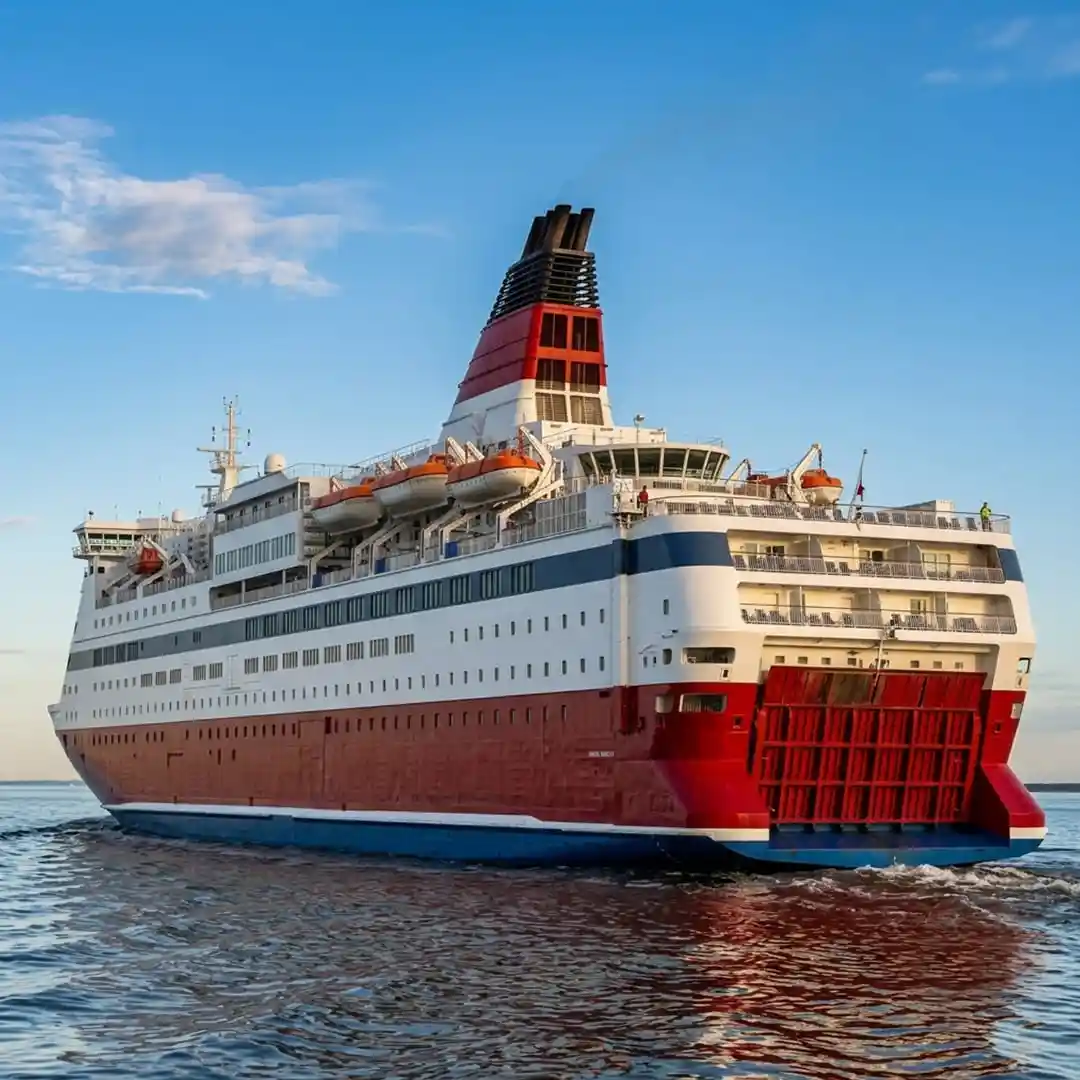
You may be startled when you check the passenger capacity of a large ship. When there are thousands of people living, eating, relaxing, and moving around on one vessel, it really sounds like a recipe for longer queues and packed corridors. However, when you’re onboard, the experience tends to be very different.
You find out that much of the ship doesn’t feel as crowded as the numbers clearly suggested. This is not an accident of any kind. It’s the layout of the ship. The layout of modern ships use space distribution, passenger flow, scheduling, multiple venues, vertical separation, and thoughtfully positioned attractions as well.
This prevents everyone from gathering at one place. This doesn’t eliminate crowds completely. However, when you understand how ships distribute people, you’ll also understand how thousands of people seemingly disappear once the voyage begins.
Passenger Capacity Is Only Half the Story
When viewed without context, the passenger count of a modern vessel looks gigantic. Imagine several thousands people entering one building. The basic assumption here is there will be an overcrowding of every hallway and room. However, a ship is not one giant shared room.
With passengers distributed across cabins, restaurants, lounges, pools, theaters, shops, outdoor decks, activity areas, and numerous other spaces, ships can successfully eliminate overcrowding. Besides, at a given moment, a significant chunk of passengers will always be inside their cabins as well.
Thus, the useful question is not simply to ask how many people are onboard, rather the useful question here is how many of these people will use the same space simultaneously. Even if a vessel carries thousands, it can surprisingly feel comfortable, when these passengers are divided among dozens of different destinations.
Ships Are Designed Around Passenger Flow
The fundamental part of a ship design is passenger movement. The position of elevators, staircases, corridors, atriums, and public spaces is thoughtfully selected to create multiple pathways throughout the vessel. Thus, it doesn’t simply force everyone through one central route, instead, larger ships provide you with multiple pathways to move through important areas.
This helps in spreading the traffic both vertically and horizontally. Some may use a different elevator bank when traveling to an outdoor deck, than someone headed towards the restaurant. Other passengers may remain on the same deck and walk between nearby venues.
With these different routes, ships prevent their entire passenger population from moving as one large crowd. There’s a subtle effect of this thing, as passengers tend to notice congestion more easily than they notice efficient movement. Nobody thinks about it, when circulation works properly. They simply arrive where they wanted to go.
Multiple Venues Divide the Crowd
When passengers have multiple places to do the same thing, it helps in reducing perceived crowding significantly. Larger ships offer several dining venues, instead of relying on one enormous restaurant. Besides, they tend to distribute entertainment between theaters, lounges, activity spaces, outdoor areas, and smaller performance venues as well.
Even when it involves something as simple as getting a drink, passengers tend to have multiple choices. Thus, a natural fragmentation is created. Even if a thousand passengers are all looking for evening entertainment, they don’t end up at the same door.
While some watch a performance, others simply sit at the lounge, and some may eat dinner. There are others simply walking around. Thus, with choices it’s not just that the cruise is becoming more entertaining, it is also ensuring fragmentation. This helps in better crowd management altogether.
Vertical Space Makes a Huge Difference
Cruises generally don’t spread their passengers across a single horizontal floor. Instead the distribution takes place across numerous decks. With this vertical separation, how passenger numbers feel dramatically change.
Even though several hundred people may be dining on one deck, there are hundreds more watching entertainment several levels below. Whereas, there may be another group that’s enjoying a swim or a relaxing outdoor activity outdoors and others remain within their cabins during such times.
The crowd would be obvious, if all these passengers were placed on one level. The population becomes much less visually apparent, when you stack them in multiple decks. While helping maintain separation between different types of activities, elevators and staircases connect these areas.
The ship is essentially functioning as a stack of neighborhoods, rather than an enormous hall.
Daily Schedules Scatter Passengers Naturally
It is a rare phenomenon that passengers follow identical routines. There are people who wake up early and leave for breakfast, even before others have left their cabins. Besides, there are people who prefer late meals. Others may like to spend their mornings outsides, attend activities, relax in lounges, shop, or simply remain in their rooms.
With this variation, a natural spreading of demands across the day takes place. With scheduled activities, this effect is reinforced. Instead of placing every major activity at the same time, different activities are offered during morning, afternoon, and evening.
According to their interests, passengers divide themselves. While one group relaxes outside, another attends to an indoor activity. Others may take a nap, eat, explore the ship, or even prepare for the next part of the day. Thousands of individual decisions become an surprisingly effective crowd-distribution system.
Cabins Absorb More People Than You Notice
In reducing visible passenger number, cabins have a role that’s often overlooked. In a ship, not everyone is in the public space at the same time. Throughout the day, cabins have a massive role to play. Passengers may return to their cabins to change clothes, rest, shower, prepare for dinner, spend time on balconies, or simply enjoy their privacy.
At any given moment, even if a handful portion of passengers is within their cabins, this removes hundreds of people from their shared space. For instance, before dinner, public decks briefly tend to feel quieter. This is because many passengers are preparing in their cabins.
Later these passengers reappear around restaurants and entertainment areas. The crowd doesn’t simply vanish. They’ve simply moved behind thousands of cabin doors.
Large Spaces Use Visual Tricks Too
The number of people inside a space doesn’t exclusively determine how a space feels. The perception of spaciousness is impacted by aspects like ceiling height, sightlines, furniture placement, windows, open areas, and the shape of walkways.
When a room is wide and has several seating zones, it tends to feel less crowded than a narrow room containing the same number of people. Ships generally use this principle to break large public sections into smaller sections. Distinct zones within one larger venue is generally created by seating clusters, architectural features, changes in flooring, and partitions.
Thus, passengers tend to experience the room in smaller visual spaces. This helps in ensuring a result that feels more comfortable than one enormous space that’s filled with hundreds of people.
Crowd Hotspots Still Exist
Crowding is not eliminated completely simply with good design. There are moments when a large number of people may want the same thing at the same time. Elevators tend to become busy during dinners or even during major entertainment periods. During popular meal times, dining areas tend to witness longer queues. On warm days at the sea, outdoor areas fill rapidly.
Passengers are also concentrated near exists when the ship arrives at the destination. This is largely because many people want to get ashore as quickly as possible, after the ship docks. And the same thing happens when passengers return.
These moments are useful reminders that the passengers were never really gone. They were simply distributed effectively until a shared event synchronized their movements.
The Ship Is Constantly Redistributing People
The interesting thing about passenger flow is that it never really halts. Morning moves people toward breakfast and outdoor spaces. Afternoon activities scatter them across the ship. Evening pulls passengers toward restaurants before redistributing them among entertainment venues, lounges, cabins, and outdoor areas.
The population remains roughly the same, but its location constantly changes. Ship design works with this movement rather than fighting it. Multiple decks, numerous venues, alternative routes, varied schedules, cabin spaces, and different activity zones collectively prevent passengers from remaining concentrated for long periods.
Thousands of Passengers, Hundreds of Experiences
A cruise ship may carry a population comparable to a small community, yet passengers rarely experience that population all at once. Instead, they experience fragments of it. You see the people sharing your restaurant, the passengers near your pool, the group attending the same activity, or the neighbors walking through your corridor.
Elsewhere, thousands of other passengers are having completely different experiences at exactly the same time. That is the hidden reason passenger capacity can be deceptive. The number tells you how many people are onboard. It does not tell you where those people will be, when they will gather, or how the ship has been designed to distribute them.
Once the voyage begins, the crowd does not disappear. It simply dissolves into the architecture.